

Choosing the Right Size Tractors: A Practical Guide
Key Points
- Understanding Your Needs: Identifying your unique requirements and tasks is crucial for selecting the right tractor size.
- Horsepower vs. Weight: Evaluating horsepower and weight can help match the tractor to your specific agricultural needs.
- Size and Attachment Compatibility: Choosing a tractor size compatible with your current or planned attachments ensures versatility and efficiency.
Understanding Your Needs
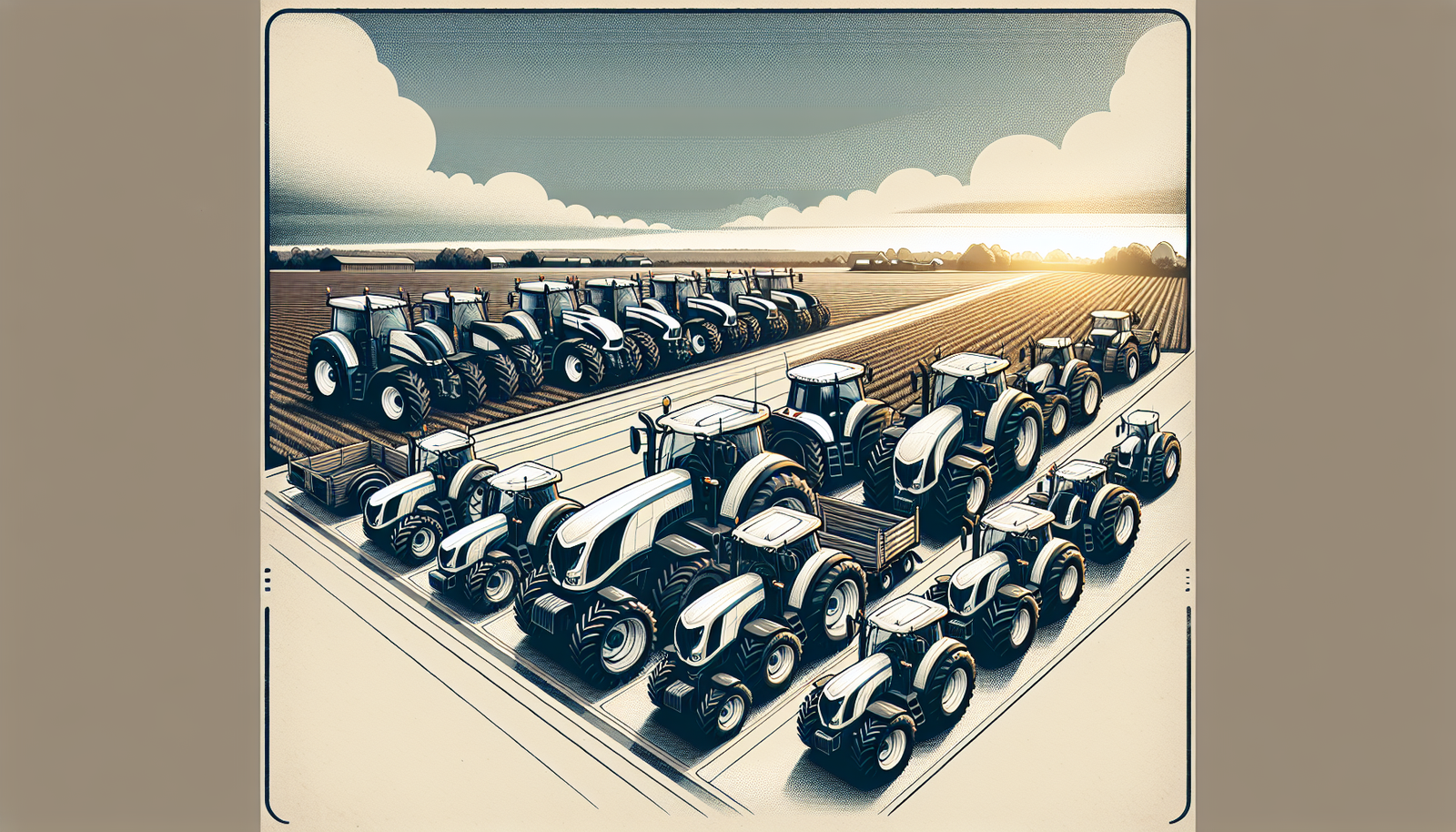
Alright, let’s dive right into it. The first step in how to select tractor size isn’t looking at the machines themselves; it’s about understanding your own needs. Have you ever found yourself overwhelmed at a dealership, staring at row after row of shiny tractors, not knowing which one would work best for you? Trust me, I’ve been there. I once went to buy a tractor that was way too big for my little farm, thinking bigger was better. Spoiler alert: it wasn’t. The truth is, the size of the tractor you choose should directly correlate with the tasks you need to tackle. Think about what you’re going to be doing – it could be mowing, tilling, or hauling loads. Each of those tasks may demand a different size and style of tractor.
For instance, if you’re managing a couple of acres and mostly mowing grass, you won’t need a beast of a machine with 100 horsepower. A compact tractor, maybe in the 20 to 30 horsepower range, is often the sweet spot. Trust me, I’ve found that choosing a tractor that fits your acreage can save you headaches both during operation and in your wallet.
Look, also factor in your terrain. Are you on flat ground, or do you have some steep hills? On hilly terrain, a smaller, lighter tractor might actually perform better than a heavy-duty model that’s hard to control. I know a guy who bought a larger tractor for his garden operation and ended up getting it stuck on a slope not once, but twice. So consider your work environment!
Finally, don’t neglect to account for future needs. As your farming venture grows—or if you have aspirations of expanding—you might want a tractor that can do more than what you’re currently asking. A bit of foresight goes a long way. Are there other tasks on your horizon, or maybe attachments you’d want? Keep those in mind as you consider size. What does your ideal future look like?
Assessing Your Land
Also, when sizing your tractor, take a close look at your land’s unique features: The size of your fields, terrain types, and even how the seasons affect your farming practices. If you’re dealing with rough land and obstacles, a smaller, more agile tractor is often easier to navigate.
Horsepower vs. Weight
Horsepower and weight. These are two crucial metrics you can’t ignore when figuring out how to select tractor size. Here’s the deal: horsepower (or HP) gives you an idea of how much work your tractor can actually do. Depending on your tasks, you’re going to need a certain amount of horsepower to operate effectively. As a general rule of thumb, for every 10 acres of flat land, you’ll need about 25 HP to keep things moving smoothly. But if you’re plowing through heavier soil or working with hills, that number jumps.
I remember a time on my own farm when I underestimated the power I needed. I tried to tackle a heavy-duty tilling job with a 30 HP tractor, and let me tell you, it was a slap in the face. It struggled, overworked itself, and I ended up behind schedule—and way more frustrated than I’d ever want to be. So, do your research on what tasks you’ll be performing and work backward to figure out how much HP you really need.
At the same time, weight matters too. An appropriately weighted tractor can improve traction and stability, especially on slopes. A heavier tractor can dig into the ground but can also make it more difficult to maneuver in tight spaces. Think about your soil type, too; lighter tractors may work better in sandy soils, while heavier ones can push through clay. From personal experience, I often prefer a slightly heavier model for plowing, but when it comes to landscaping or tight turns around my orchard, the lighter tractors deliver just enough finesse without sacrificing too much power.
Plus, let’s not ignore the importance of balance. A tractor isn’t just about raw power; it’s about how that power translates in the field. When matched correctly, horsepower, weight, and even tire size work together to give you an effective setup that can handle the rigors of farming.
Finding the Right Balance
You’d be surprised how many people pick a tractor solely based on HP without considering weight. It’s like choosing a race car because of its speed but forgetting no one can control it on the road.
Size and Attachment Compatibility
Here’s something that blows a lot of folks’ minds: it’s not just about the tractor itself; it’s also about compatibility with attachments. If you’re looking at how to select tractor size, you’re planning on using various attachments like plows, loaders, or balers. Factoring in size ensures you get a machine that’s versatile enough to handle what you need. So let me paint you a picture. I once had a tractor that seemed like the perfect fit. But when I brought my tiller over, I realized my tractor had a lower lift capacity than I thought. It left me scaling back on my work for the season, which was disappointing, to say the least.
Different attachments have different requirements. For instance, a front loader will need a robust hydraulic system and adequate size to lift loads effectively. A smaller tractor may struggle under the weight of a large loader or operate inefficiently.
Not to mention, think about future expansion of your needs. If you’re planning to use multiple attachments down the road, why not consider a slightly larger tractor now? You won’t want to end up in the situation I did, where I had to change tractors only a couple of years into my venture when I realized my initial choice didn’t accommodate the various tools I had added to my workflow.
Compatibility doesn’t just end with size and lift capacity; it also affects connectivity. Some equipment may require special hook-ups based on the tractor’s model. Make sure any attachments you’re considering from the get-go won’t only fit onto the tractor but work seamlessly with its abilities. It’s kind of like trying to fit a square peg into a round hole—it just doesn’t work out, does it?
Planning for Future Attachments
Thinking ahead for possible add-ons is key. If you anticipate buying more implements down the line, getting a slightly larger, more capable tractor can save you the hassle of upgrading sooner than necessary.
Budgeting for Your Tractor
Let’s talk money, because no one likes to be blindsided by expenses. When considering how to select tractor size, your budget can really dictate what options you’ll find acceptable. Here’s the thing: it’s not just the tractor purchase that you need to consider but the total cost of ownership. I’ve always found that a few additional expenses in the beginning can save you headaches later on. For instance, a small, less expensive tractor might have a low sticker price, but if it’s constantly breaking down or unable to handle the load, you might end up shelling out more cash for repairs or even new purchases.
Assess your budget for both initial investment and ongoing maintenance. Gotta factor in fuel costs and other maintenance items—tyres, oil changes, and more. It’s an unfortunate truth, but a good friend of mine learned the hard way that a less expensive model isn’t always the best buy. His cheap tractor ended up costing him more in repairs and replacements than investing in a solid, well-reviewed model upfront.
You’ll find tractors at all levels of the market, from small, compact utility tractors to larger farm tractors; it’s essential to find a balance between what you can afford and getting the job done efficiently. And don’t forget about financing options! There are often great deals or loans available through dealerships, which can make a larger tractor much more accessible. But remember this: do the math. Calculate the return on investment through improved efficiency against what you might be initially spending.
At the end of the day, you want something that’s going to work for you—not just today but years down the road. Think through your budget carefully, considering the long-term costs of ownership versus short-term gains. I’ve been burned by trying to save a buck too many times, and now I always opt to spend a little more for better quality the first time around.
Understanding Total Costs
While shopping, look beyond the sticker price. Break down fuel, maintenance, and insurance costs. It might surprise you how costs can add up!